
L-theanine is a non-proteinogenic amino acid that is synthesized by a couple of fungi and plants, among them tea. It is an analog of glutamate, an excitatory neurotransmitter. It is known for its ability to promote relaxation without inducing drowsiness, as well as its potential cognitive benefits.
In the nootropic community (if that is even a thing), it is most famous for being combined with caffeine to cancel out some of its adverse effects while promoting cognition.
In addition, some people find that L-theanine by itself is a useful short-term anti-anxiety agent – without the risks and side effects of benzodiazepines. Because little to no money can be made from it, pharmaceutical companies have little interest in generating the evidence necessary for it to be more widely employed for clinical use.
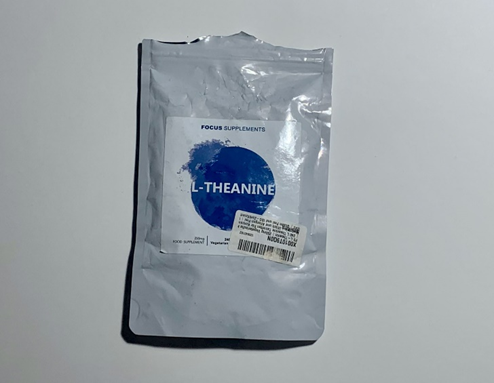
Personal experience
A few years back, after starting moclobemide, I experienced true clinical anxiety for the first time in my life. When my nervous system spiraled out of control, it was impossible to use thoughts as an antidote – trying to rescue thinking with thinking was futile.
Directly negotiating my emotions, namely changing my neurobiochemistry, proved much more powerful than conceptualizing, whether that meant going for a run, breathing exercises, meeting friends, or taking L-theanine. If my neurobiochemistry changed, I would have different thoughts and outlooks in the first place.
At the time, I had to study for my finals so going for runs or meeting friends all day was off-limits. Furthermore, benzodiazepines or gabapentinoids were a no-go as they are known to impair alertness, cognition, and memory retention, which was the last thing I needed at the time.
Back then, I found the occasional dose of L-theanine (e.g., 125-250mg) to be incredibly effective whenever bouts of anxiety arose.
Once, I gave 500mg of L-theanine to a crying friend, who is a psychiatrist. She has never heard of it and after a quick search on PubMed, she decided to take it. She loved it so much that she immediately ordered some herself.
I have never used L-theanine for nootropic purposes, so I cannot comment on that but some friends love to combine it with caffeine (which I hardly ever use for a variety of reasons).
How it works
How exactly L-theanine works is not well-researched. L-theanine is a glutamate analog and is thought to bind to glutamate receptors, especially of the AMPA subtype, at which it is thought to act as an antagonist. Given that glutamatergic and GABAergic systems are closely intertwined, the modulation of glutamate receptors by L-theanine is thought to indirectly increase GABA levels.
Contrary to other molecules that increase GABA levels, L-theanine does not reduce levels of other monoaminergic transmitters (histamine, dopamine, serotonin, noradrenaline). Additionally, it is believed that in low doses, L-theanine may increase dopamine levels through an unknown mechanism.
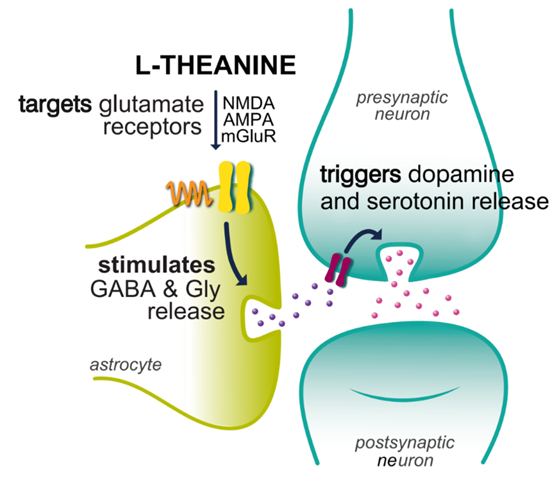
These unique properties make L-theanine a great calming agent without sedation, “dumb-down” effects, or causing impairment in cortical plasticity, all of which are common to other CNS depressants. Furthermore, it is cheap, available OTC, and very likely safe.
Subscribe to the Desmolysium newsletter and get access to three exclusive articles!
Phenibut
A slightly more powerful (but much more addictive) compound that works similarly in its effects, but not necessarily its mechanism, is phenibut. Phenibut is one of these molecules for which there is little credible data other than Reddit anecdotes.
Based on its mechanism of action (either a mild GHB-like modulation of the GABAergic and glutamatergic systems similar to gabapentinoids, or a GABA-B receptor agonism like baclofen, or both) it is safe to say that phenibut can be addictive, particularly for socially anxious individuals who fall in love with the uptick in sociability.
According to internet anecdotes, phenibut has destroyed quite a few lives. Like tianeptine and kratom, there is its own Reddit group for people trying to quit phenibut (r/quittingphenibut).
Other experience reports
For a discussion of the molecular correlates of well-being, and links to accounts of various related molecules I have experimented with, read here.
For a full list of experience reports click here.
Sources & further information:
- Scientific review: Effects of l-Theanine on Cognitive Function in Middle-Aged and Older Subjects: A Randomized Placebo-Controlled Study
- Scientific review: Effects of L-Theanine Administration on Stress-Related Symptoms and Cognitive Functions in Healthy Adults: A Randomized Controlled Trial
- Website: Wikipedia – L-theanine
Disclaimer
The content available on this website is based on the author’s individual research, opinions, and personal experiences. It is intended solely for informational and entertainment purposes and does not constitute medical advice. The author does not endorse the use of supplements, pharmaceutical drugs, or hormones without the direct oversight of a qualified physician. People should never disregard professional medical advice or delay in seeking it because of something they have read on the internet.