
I did not want to write an article about finasteride before having been on the drug for at least one year because I feel that this amount of time is needed to properly judge benefits and side effects. As of the time of this writing, I have been on finasteride for a little over two years.
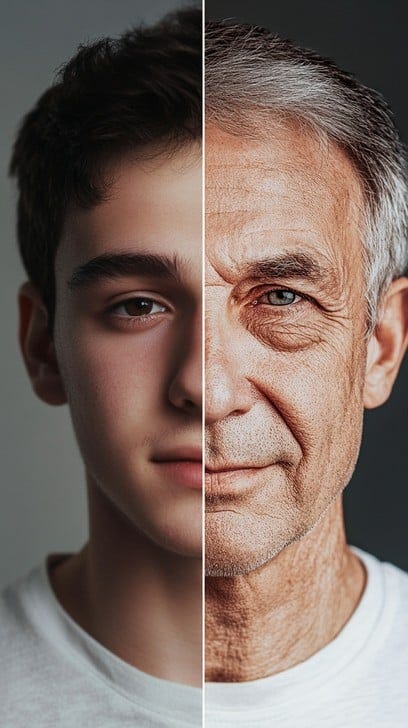
I started a microdose of finasteride (hoping) to slow down my rate of aging from a cosmetic & visual perspective, despite having no signs of hair loss whatsoever. Why? Generally, individuals with low levels of testosterone generally age slower and better than individuals with high levels of testosterone. This is readily evident from individuals with clinical hypogonadism contrasted to individuals who have been using anabolic steroids.
Thus far, the results seem very promising but more on this soon.
Finasteride is part of my “TRT lite” protocol, which is discussed here. Essentially, a low dose of finasteride allows me to reap many of the benefits of TRT (e.g., drive, libido, muscle growth) while not having the visual aging acceleration, such as the “spent” skin, older face, and coarse facial features associated with it.
This video shows the evolution of Chris Bumstead over time. Even though his physique is great (at least judged from a perspective of bodybuilding), this video could pass as a tutorial on how to age 15 years in 5.
Background
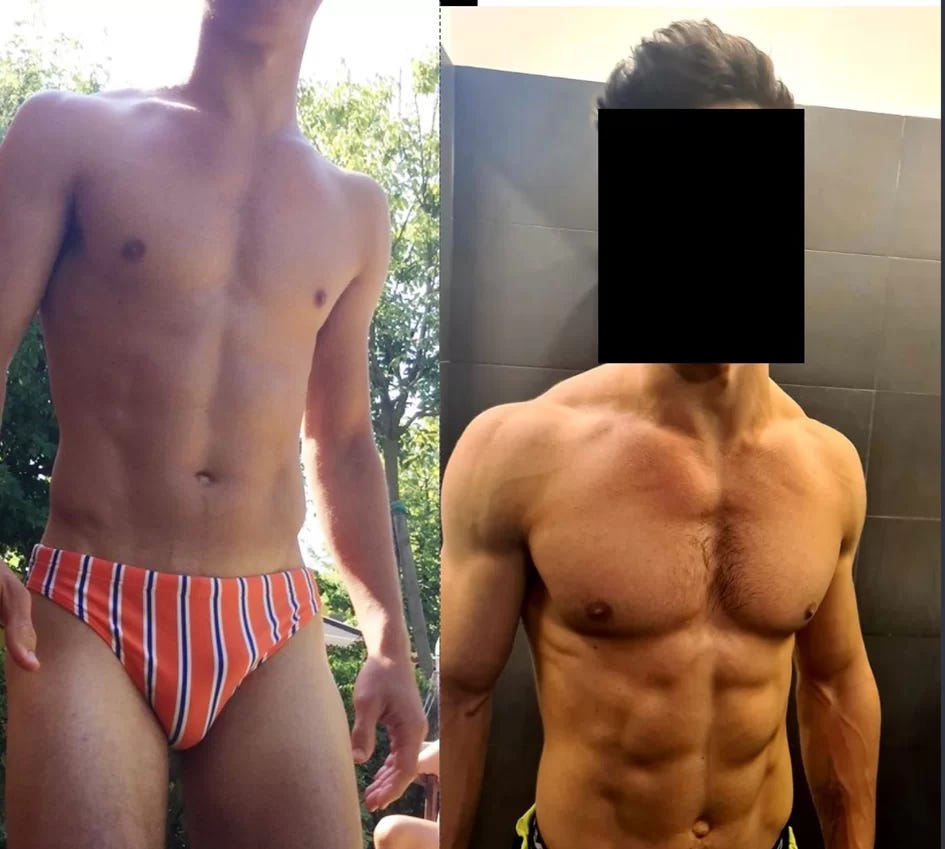
Between 22 and 25 I was on TRT (discussed here). On the left I am 21 (a couple of months before hopping on TRT) and on the right I am 25 (after about three years on TRT – 100mg testosterone per week).
However, the most striking changes pertained to my face. Before, my face could have easily passed for 17. In fact, on my 21st birthday I wanted to buy some wine in the store and the cashier asked me for ID-proof that I am already 16 (the legal age for buying wine in my country).
However, three years after TRT, my face had aged by about 5-7 years and my face looked every bit as old as I was chronologically. I looked quite boyish before so it was not something that bothered me. This transition from boyish to manly may be in part explained by a redistribution of facial fat & a growth in facial musculature but it is probably more than that.
Out of curiosity, I sometimes ask strangers how old they think I am and I usually get around 30 (I am 31). But I am sure that had I never been on androgens, I would look considerably younger than that. Also, I would not have a beard. One of my brothers is 25 but looks like 20 – coincidentally (or not) his testosterone and DHT levels are at the bottom of the range.
After a multi-year hiatus of T (with perfectly recovered T levels), I decided to try out TRT again. After only two months, I noticed an increase in body hair. My beard and head hair grew faster and I had an increase in arm hair, new hairs grew on my chest, and I started to get very small dark hairs on my biceps, which I have never had before.
Because virilizing changes are permanent, this was the primary reason I stopped TRT temporarily and not started again until I had established a microdose of finasteride as a “visual aging protector”. I discuss my second run with TRT and the TRT lite protocol I am currently on in more detail here: My TRT Lite Protocol.
Soon after stopping TRT temporarily, I talked to a friend in his 40s, who could easily pass for being in his early 30s. He believes that his “secret” is a low dose of finasteride (0.25mg) he has been taking for about 15 years. He is virilized like a man would be around 10 years younger than him. It is hard to define what I mean by “virilized” and it is more like a “I know it when I see it” kind of thing. For example, the prototypical lumberjack is highly virilized, whereas the prototypical boyband member is poorly virilized.
I started to pay attention to these kinds of things and noticed that the visual age of the four uncles on my mum’s side (all in their late 40s and early 50s) seems to correlate quite well with how “manly” they are. The two that I would attribute “high T” to both look significantly older than the two I would attribute “medium to low T” to. It goes way beyond androgenic alopecia. It involves body hair, facial features, body fat distribution, and especially the facial skin.
Furthermore, it seems that the majority of people who have been on TRT (and certainly steroids) for a long time look significantly older. One friend of mine has aged by about a decade in only two years of hardcore bodybuilding. He is only 23 but looks like someone in his thirties. Similarly, this video showing the evolution of Chris Bumstead over time. Even though his physique is great (at least judged from a perspective of bodybuilding), this video could pass as a tutorial on how to age 15 years in 5.
It generally seems that “masculine” men (presumably with high levels of androgens and/or androgen signaling) peak early but less “masculine” men peak late – and stay at their peak (in terms of looks) for much longer. Ashton Kutcher seemed to not age at all while he took dutasteride. Once he stopped taking it, he started to look older quite quickly.
Well, why does Trump not look very young then? Trump has also been on finasteride for decades but he only started taking it in his 50s, which is probably way too late for a noticeable effect because he had already fully virilized before.
While probably 100s of genes are at play, it seems that androgen signaling is a major factor in how fast a man ages (from a visual perspective). Exogenous androgens drive aging, while 5-alpha reductase inhibitors slow it down. Individuals with early onset hypogonadism tend to look much younger than they are, while the opposite is true for individuals with high levels of testosterone.
It is well supported that men of Asian descent have lower T levels. Many of them also seem to age quite well. Androgens may be one of many factors.
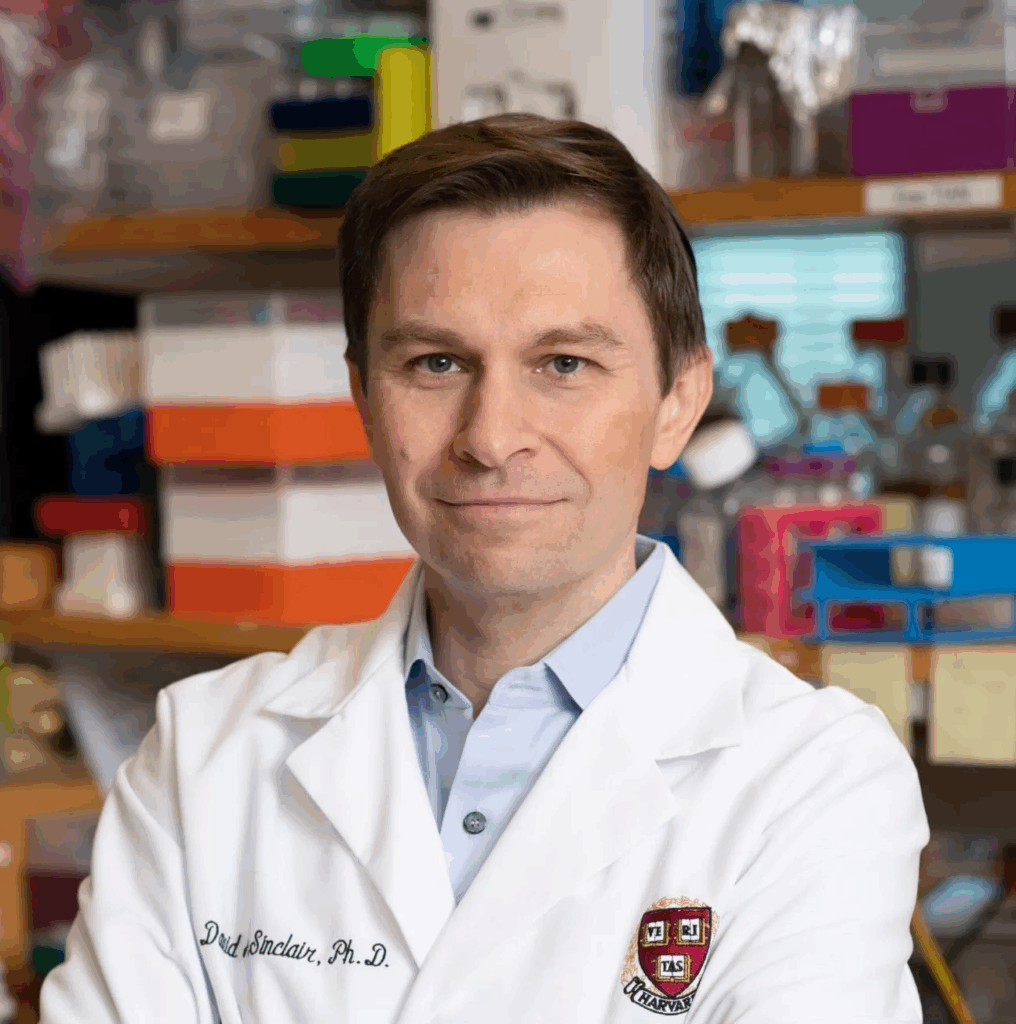
Why does David Sinclair look so young for his age? It is not the worthless resveratrol and NMN he religiously mixes into his joghurt every morning but rather the finasteride he has been taking for decades! He obviously credits his supplements for his looks, from which he makes a killing… This is him at 55 years old.
This may even extend to longevity. A recent large meta-analysis across vertebrate species found that castration and other forms of reproductive suppression were associated with roughly 10–20% increases in lifespan in many mammals, particularly when castration occurred early in life.
Most men only take finasteride to prevent hair loss. However, finasteride does much more than that! DHT not only drives hair scalp hair loss, but it leads to accelerated skin aging due to a number of mechanisms which ultimately come down to widespread changes in gene expression.
These effects include maturation of hair follicles, pore size and sebum production, and elastin breakdown. The result is that higher androgen signaling makes males look older, coarser, and more rugged – features that are generally considered aesthetically unpleasant after a certain point of masculinization has been reached.
There are quite a few plastic surgeons who vouch for the greatness of 5aRi on skin age/health/beauty given that the skin (including its appendages such as hair follicles) is the primary organ which we judge age by (because the skin and its appendages are – next to body composition – pretty much the only thing we see). This might also account for a lot of male celebrities who seem to age freakishly well, though “good genes” are a heavy confounder.
Despite the known adverse effects (which in the case of post finasteride syndrome can be devastating), I decided to take a very low dose of finasteride. But first, let us briefly discuss the science behind it.
Note: Androgen signaling is only one of many factors driving the visual aging process.
The science of finasteride
Simply speaking, estrogens (particularly estradiol) keep the skin firm, elastic, and youthful, whereas androgens (particularly dihydrotestosterone) do the opposite.
Finasteride blocks 5-alpha reductase type II. 5aR is responsible for converting testosterone into the more potent androgen DHT.
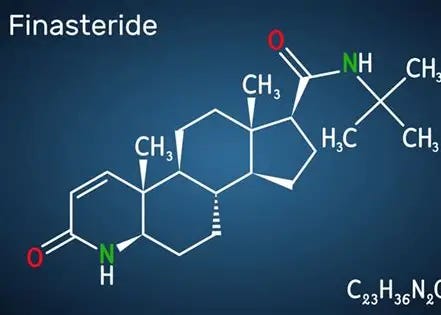
Why does DHT exist? The primary function of DHT is during development. By converting testosterone into a much more potent metabolite only in some tissues, nature can selectively have strong androgenic signaling in these tissues while sparing other tissues. Therefore, the primary function of DHT is tissue-selective amplification of androgen signaling during development. Nature can achieve a local tenfold increase in androgenic signaling (DHT is a roughly 10x more potent androgen receptor agonist than T) in specific organs without exposing all tissues to high androgen levels, which would cause havoc during development. This is important for androgenic tissues such as the brain, skin, prostate, and the penis.
If finasteride were taken from a young age, some tissues will be heavily affected in their development and the results would be, among other things, a small penis, very little beard and body hair growth, and presumably a less manly brain & behavior. After development is completed, DHT is not that important anymore because its effects pertain more to functional changes than structural changes, which mainly occur during certain “plastic” periods. It still has some effects, in some people more than in others. Similarly, some people can take finasteride without any side effects, while others seem to suffer severely.
Finasteride blocks the type II version of 5aR, which is the primary isozyme found in the skin and hair follicles (among other organs). Most of the DHT is not circulating but is rather derived locally. 5aR type II is responsible for roughly 70% of the body’s DHT pool. Dutasteride also inhibits the type I isozyme, which is found in the liver, kidney, and brain, among others. While finasteride blocks about 70% of DHT conversion (more in “androgenic tissues”), dutasteride blocks nearly 99% of it.
DHT is the primary androgen only in a couple of tissues because, firstly, 5aR-concentration varies by tissue and secondly, some tissues such as muscle tissue have 3-alpha-hydroxysteroid dehydrogenase (3aHSD), which inactivates DHT. Because of this, DHT is very androgenic (full effect in some tissues) but weakly anabolic (little effect in muscle).
The dose-response curve of finasteride is quite steep. With 0.25mg/day, skin and hair already have near maximum DHT-reduction. Thus, there is no need to ever go above 0.3mg per day. Why South Korea is the only country having 0.25mg tablets is beyond me. Higher doses increase the side effect burden while being of little benefit. A single dose of finasteride suppresses serum DHT levels for up to 4 days so its biological half life is much longer than its pharmacological half life.
In one study, there was a tiny increase in additional hair count per square inch when going from 1mg to 5mg, but the rate of side effects was disproportionately higher. In this way, finasteride is similar to statin. A very low subclinical dose gives you most of the good, while giving you much less of the bad. I discuss statins in more detail here.
How finasteride came to be
In Las Salinas, a remote corner of the Dominican Republic, roughly 1 in 100 boys is born looking like a girl. They’re raised as girls until puberty hits and they grow a penis, drop their voice, and put on male muscle. The locals have a word for them: guevedoces, “penis at twelve.”
In the 1970s, a Cornell endocrinologist went down to figure out what was happening. She found that these kids are born missing 5α-reductase type II, the enzyme that converts testosterone into DHT. Their testosterone was fine but they lacked its amplifier. And it turns out DHT (and not testosterone) is what masculinizes the external genitalia in utero. No DHT, no penis at birth. The pubertal testosterone surge (testosterone is the much weaker androgen) is eventually large enough to virilize them the slow way, hence the dramatic late switch.
These men, walking around as natural 5α-reductase knockouts their whole lives, had two conspicuous absences: they had tiny prostates, and they didn’t go bald.
Merck was paying attention and was trying to mimic the penis-at-twelve deficiency pharmacologically. Kill DHT but leave testosterone intact. The drug became finasteride, which was approved for enlarged prostate in 1992. The male baldness indication came second.
My personal experience with finasteride
There is no biological free lunch. Blocking one of the two major androgens in the body does not come for free (more details in the next section). However, after researching the topic quite heavily for a month (and most importantly: talking to people who are actually take the drug), I decided that I am willing to take a small chance of side effects (including a very small chance of irreversible side effects) for the reward of hopping back on my TRT-lite protocol for the benefits (e.g., energy, libido, etc.) without having to fear the unwanted cosmetic side effects from androgens.
On HCG + finasteride I probably age even slower than without either. I have a full head of hair and probably good hair genetics. One of my grandpas died a couple of years ago with the age of 80 while still having a full head of hair, the other recently died at the age of 96 with perhaps 20% of his hair, including still hair on top.
Regarding side effects, my line of thinking was the following: Given that my testosterone levels are around 1000ng/dl I am much less prone to developing side effects in the first place (given that testosterone can compensate for the reduction in DHT in some tissues that do not primarily rely on DHT – pretty much every tissue other than skin, hair follicles, and prostate). Furthermore, I figured that if I would start the drug very slowly I could always taper off in case of side effects.
All the fear-mongering around post-finasteride syndrome did indeed scare me. However, I figured that in case of worrying side effects, I could just taper off (cold-turkey withdrawal is associated with PFS). Furthermore, a dosage of 0.05mg per day is unlikely to cause permanent issues. Anyway, I decided to just accept the tiny risk.
Similarly, I would not be on finasteride if I were not also on TRT because then I would probably have a higher rate of side effects given that 5aR-Inhibitors have much more side effects for people with low-ish testosterone.
Given that finasteride has a biological half-life (days) much longer than plasma half-life (hours), every other day administration is sufficient. I started out by cumbersomely splitting tablets and taking one 1/16th of a Propecia tablet (1mg) every other day, amounting to roughly 0.06mg every other day, so 0.03mg per day.
After 2 days, my erections got weak (but my sex drive was fully intact). It was still sufficient for successful intercourse, but it scared me. Furthermore, I also got puffy and itchy nipples, which scared me even more. I took a blood test after 14 days, and my DHT levels were already below the lower end of the reference range. After one 1-2 weeks, my erection quality was back to normal and after a month or so, my nipples were back to normal.
Initially, I also felt and behaved subtly “less manly” but I am not sure how much of that was in my head. I am quite certain that it was not – presumably due to the reduction in dopamine levels caused by the slashing of DHT, which does act on ventral tegmental neurons (source of dopamine).
Anyway, changing neurosteroids and DHT levels surely has at the very least a subtle effect on my neurocognitive and emotional functioning but hard to say how large that effect is. So, I think that it was not exclusively in my head.
Because I had an increase in chest hair from my TRT lite protocol, after 3 months, I doubled my dosage to 0.06mg taken every day instead of every other day. To even out biological fluctuations, I decided to compound capsules instead of splitting tablets. From now on, dosing was done by grinding the finasteride tablets and then mixing the powder with a specific quantity of methylcellulose powder to get capsules of the desired dosage.
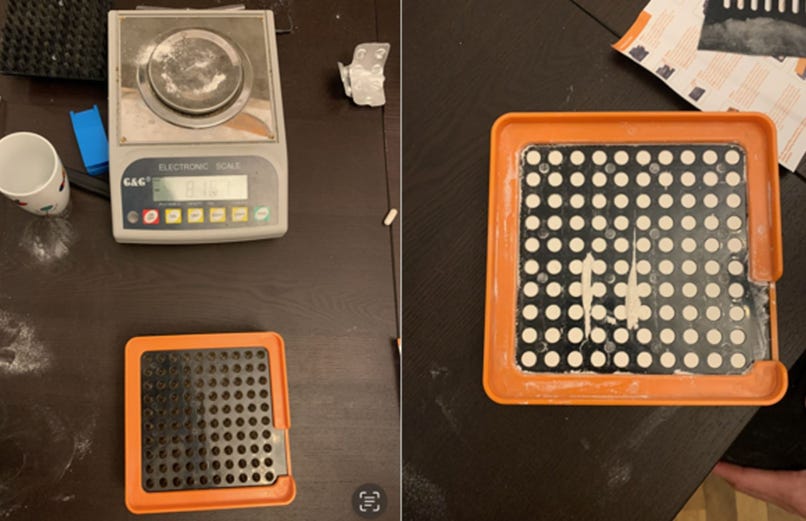
Interestingly, on this dose, my body hair started to reverse. After six months on the finasteride (3 months of 0.03mg + 3 months of 0.06mg) the tiny black hairs on my biceps reversed to the point that they were gone. This was fascinating to see. I tested my blood levels of DHT and at this dose, my DHT levels were at around 400 (range: 300-800).
I started to use these biceps hairs as a guide for virilization. Tiny black hairs had started to grow on the front of my biceps after my second run with TRT already after 2 months (explained in more detail here). Their growth was halted after starting 0.03mg of finasteride daily for 3 months. Interestingly, they started to reverse after 3 months on 0.06mg of finasteride and turned to tiny blond vellus hairs again, something I did not expect.
At the six-month mark, I increased the finasteride further to 0.125mg every day (a quarter of a tablet taken every other day).
At my third dose increase, I did not have any side effects whatsoever. One side effect I was hoping for was increased sexual stamina (in a similar way, SSRIs increase sexual stamina by making people less horny). Unfortunately, my sexual stamina is unchanged, and because I am also on HCGI am considerably hornier than before.
Currently, I am at the 26-month mark and, as far as I am aware, I do not have any side effects. I have little body hair (an indicator of slow virilization despite my TRT lite protocol), my skin looks young and fresh (despite the TRT), no acne anywhere on my body.
This is me at 30 years old and about 1 year after starting finasteride.

My testosterone and my estradiol are slightly above the normal reference range (due to the HCG I am on). I have gained about 5kg of muscle on this protocol, my libido is the highest it has been since my youth, and my energy levels are decently greater than before. And the best part is that on my TRT lite protocol I am not even shut down (i.e., my LH & FSH levels are still within range albeit lowly).
As a rule of thumb it can be said that about 40% of the benefits of TRT are due to T itself (which is the primary androgen in some tissues), 40% of the benefits due to E2, and probably less than 20% are due to DHT (which has potent neurocognitive effects – for some more than for others). It is probably reasonable to assume that different people benefit differentially from the different hormones. Some may benefit the most from the increase in T, others from the increase in E2, and some from the increase in DHT.
Without TRT, my E2 is at the bottom of the reference range. With TRT, my E2 is at the top of the reference range. Knowing my own reactions to various hormones, I personally trade in a higher estradiol for a lower DHT any day. Interestingly, E2 has a much greater effect on my libido, aggression, and energy than DHT, even though these changes are more ascribed to DHT (the primary male hormone) than to E2 (the primary female hormone).
For me, the addition of finasteride has given me the peace of mind that my use of sex hormones does not lead to irreversible effects on my visual age, particularly facial aging. In an ideal world, I can benefit from TRT for a long time without looking old and “spent” in a couple of years like most other people who hop on the TRT bandwagon. As things are looking now, this is where I am headed.
Just as with everything else in life, there are tradeoffs. In this case, I am reducing some of my “manliness” (though probably very subtly) in favor of better skin aging, not developing excessive amounts of body hair, preventing hair loss (which I currently have no signs of), and a reduction in my risk for prostate cancer (my dad had a total prostatectomy last year).
The side effects of finasteride
The drug is heavily discussed on the hairloss subreddit r/tressless. Some people seem to have severe side effects while others do not seem to have any.
However, because the internet heavily selects for people who have a very bad reaction to a drug there is presumably a heavy distortion of finasteride experiences towards bad experiences. If I was severely harmed by a drug, I would be much more likely to write about my experience online compared to me having a good reaction.
Nonetheless, DHT is a potent hormone and if it is slashed to low levels, there will be consequences, whether the individual notices or not. For example, liver metabolism will be skewed and metabolic health probably at least slightly impaired. Given that androgen receptors are heavily distributed throughout the brain, emotionality and cognition will be at least slightly different even if the individual does not notice.
Finasteride may subtly reduce drive as the androgen receptor is heavily expressed in the ventral tegmentum (the source of motivational dopamine), libido, and other male-related behaviors. In fact, some people claim that it subtly reduces masculinity (not just visually but also behaviorally/emotionally) and this is probably true, particularly if not compensated for by higher T levels (e.g., TRT). Examples of masculinity-related behaviors would be dominance behaviors, sexual drive, or emotional unneediness.
Furthermore, finasteride increases the risk for gynecomastia given that breast development depends on a balance of androgens (inhibitory) and estrogens (stimulatory).
Furthermore, finasteride increases the risk of depression.
Some people say they have “no side effects” but how would one measure a 10% decrease in well-being, dominance, emotional neediness, drive, etc? These kinds of things would be nearly impossible to measure other than through 24/7 surveillance cameras and in-depth behavioral analysis.
How much of these “mental” side effects are due to the reduction in neurosteroid levels? Inhibition of 5AR will reduce the prevalence of neurosteroids in the brain, and dutasteride is even worse than finasteride form this aspect since it inhibits all three isoforms and the type 1 isoform is the main 5AR isoform in the brain. Other than lowering DHT, it’s probably lowering allopregnanolone, isopregnenolone, progesterone & DHP. The importance of neurosteroids is still up for debate.
I can say that for me and my friends of mine who are on it (everyone on a low dosage though), nobody notices any kind of side effect (other than during month 1 of treatment)– which though does not mean that there are not measurable changes in biochemistry, neurocognition, and behavior! I will discuss the side effects I had soon.
My dad as well as both of my grandpas had prostate cancer. Given that DHT is the primary growth factor for the prostate, finasteride reduces my risk of ever having to deal with that.
Post-finasteride syndrome
Many people say they have zero side effects – some people say finasteride has “destroyed” their lives. Probably both things are true. It seems that some people will be heavily harmed by the drug in a similar way that some people are heavily harmed by SSRIs (PSSD). Post-finasteride syndrome seems to be an all-or-nothing effect. Either you get it or you do not. Hint: The vast majority of people do not.
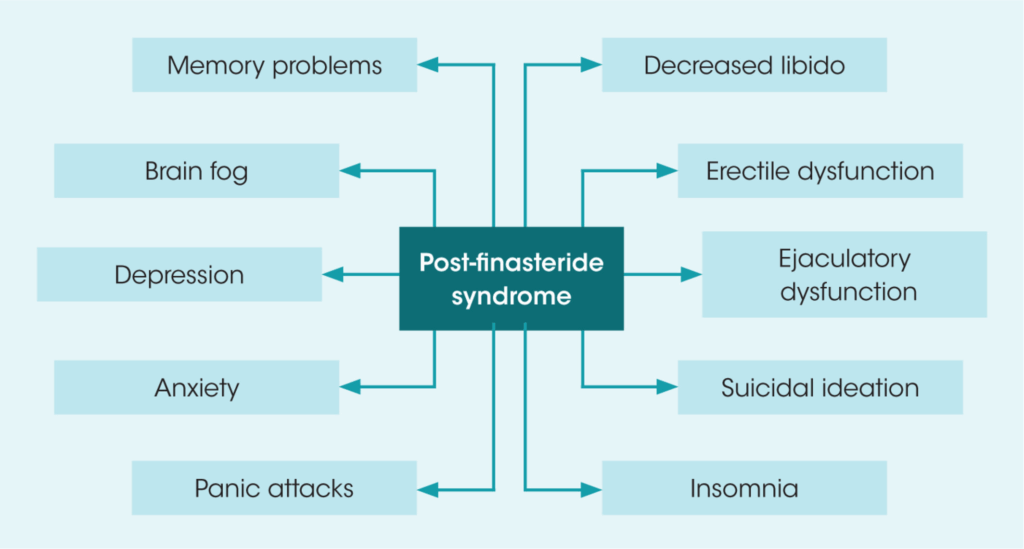
It seems that most people who take finasteride do not have significant side effects. For the ones that do have bothersome side effects (let’s say 10-20% of all people taking the drug), the vast majority of people will have their side effects fully reversed soonish after stopping the drug (lets say 80-90%). Using these numbers, this gives a rate of PFS of 1-4%, which is probably too high by a single-digit factor.
The etiology of PFS is not fully elucidated. The most likely explanation is a stubborn change in gene expression that does not reverse after androgen signaling is reintroduced.
It seems that sudden changes such as starting high doses of the drug (i.e., anything above 0.25mg) or suddenly stopping it increases the risk of PFS. Conversely, it seems that very slowly starting the drug (e.g., starting with 0.05mg/day only for a few weeks) and then very slowly tapering off (in case one does have side effects) decreases the risk of developing PFS.
If PFS is indeed caused by a sudden reduction in androgen signaling leading to some mysterious changes in androgen-mediated gene expression then the best chance of being “cured” from PFS is heavy bombardment with androgens for some time, preferably DHT-based androgens such as oxandrolone or methenolone. There is some anecdotal evidence that seems to bear this out.
Finasteride changes the anabolic vs androgenic ratio of my TRT protocol
Testosterone has an anabolic-androgenic ratio of 1:1. DHT has an anabolic-androgenic ratio of about 1:5 and some people even say 1:10 (meaning that DHT is much more androgenic than testosterone). Furthermore, plasmatic levels of DHT do not tell the whole story because much of the local amplification of T into DHT (e.g., in the hair follicles and prostate) is not reflected by plasmatic levels.
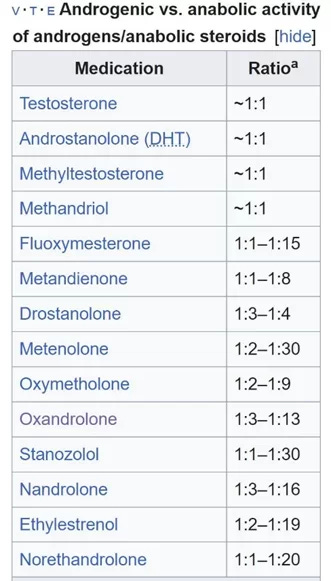
In these “androgenic” tissues, levels of DHT often exceed levels of testosterone, meaning that while in the plasma about 1 out of 10 testosterone molecules is DHT, locally, often DHT molecules outnumber testosterone molecules. In fact, some studies show that in the skin and scalp DHT levels outnumber testosterone levels by 10:1 (vs. 1:10 in the plasma). Consequently, finasteride has an outsized impact on androgenic tissues that is not picked up by a normal blood test.
So, how androgenic vs anabolic is my protocol?
My normal testosterone levels are roughly 600-700ng/dl in the morning. In the afternoon they are about 400ng/dl, leading to a daily average levels of about 550ng/dl. At this level, my DHT levels would be roughly at 50-60ng/dl (about 10% of total). So, if my natural state is my default state (100% anabolic and 100% androgenic as a reference), then on my TRT lite protocol (total T at around 1000ng/dl with less fluctuations; DHT of around 100ng/dl but reduced by 70% due to the finasteride), my total androgenic load would come out as around 80-90% of my natural state (purely judged from plasma levels) and my total anabolic load would be 150-180% of my natural state. In other words, my total androgenic load is overall lower than my baseline whereas I benefit significantly from the benefits of increased testosterone levels.
However, this calculation was done using plasma levels. In reality, plasma DHT levels do not fully capture tissue-specific androgenic activity, which, as mentioned, often deviates a lot from plasmatic levels. Accounting for tissue-specific DHT amplification the overall androgenic burden in DHT-sensitive tissues is likely reduced by much more than what plasma levels capture. If I had to guess, my androgenic state is roughly 60-70% of my baseline state instead of the 80-90% calculated above.
Hence, in theory, my protocol shifts the balance in favor of the “good” sides of TRT (e.g., muscle growth, emotionality, libido) which are mediated by testosterone and estradiol. Conversely, the “bad” sides of TRT (e.g., hair loss, oily skin, body hair growth, fast-aging phenotype, excessive libido, excessive dominance behavior) are reduced.
One has to keep in mind that roughly 50% of the benefits of my TRT protocol are not due to testosterone but rather due to the higher levels of estradiol, which I did not even discuss in the paragraphs above.
Conclusion
In the end, finasteride is a tradeoff – like every meaningful intervention in medicine and biohacking. It alters one of the body’s most potent androgenic pathways in exchange for preserving something that profoundly affects male identity, attractiveness, confidence, and arguably even social trajectory. Pretending otherwise is naive. But so is the hysterical portrayal of finasteride as chemical castration.
For me, the decision came down to probabilities. The probability that slowly losing my hair over the next decade or looking coarse and “spent” would negatively affect my quality of life felt substantially higher than the probability of severe side effects on a carefully titrated low dose.
At the same time, I think it is important to remain intellectually honest. DHT exists for a reason. It likely contributes to aspects of motivation, sexuality, aggression, and neurological function that we still do not fully understand. However, given that millions of men tolerate the drug fairly well, the functions of DHT seem to not be overly important (at least in the men who tolerate it well).
Disclaimer
The content available on this website is based on the author’s individual research, opinions, and personal experiences. It is intended solely for informational and entertainment purposes and does not constitute medical advice. The author does not endorse the use of supplements, pharmaceutical drugs, or hormones without the direct oversight of a qualified physician. People should never disregard professional medical advice or delay in seeking it because of something they have read on the internet.