
I recently had a discussion with a friend. He is almost 40 and we were weighing the upsides and downsides of starting testosterone treatment. He had been on testosterone in his 20s for a couple of years, and those years were the best of his life. Strong, energetic, in pursuit.
However, he was reluctant to reconsider it, partially because of the adverse health effects.
The adverse health effects are debatable. But for the sake of argument, and as a thought experiment, let us say that testosterone is bad and directly reduces health by 20%. However, it also has many indirect effects on your behavior and your life. For example, it may improve mood and energy, and therefore your desire to meet people, go out in the world, and try new things. All of these are quite healthy through a myriad of complex feedback loops. Or the increase in dopaminergic tone might help you find purpose, which is one of the healthiest things there is. Or you start to see changes in the gym and in your physique, and that motivates you to eat better and train even more. You feel better in your body and your self-worth increases, which affects your social, romantic, and professional life. All of these things affect your moment-to-moment well-being, which reduces your tendency to ruminate, which then feeds back on your behavior. And so on and so forth. All of these indirect 2nd and 3rd order consequences might improve your health by 40%, resulting in a net gain.
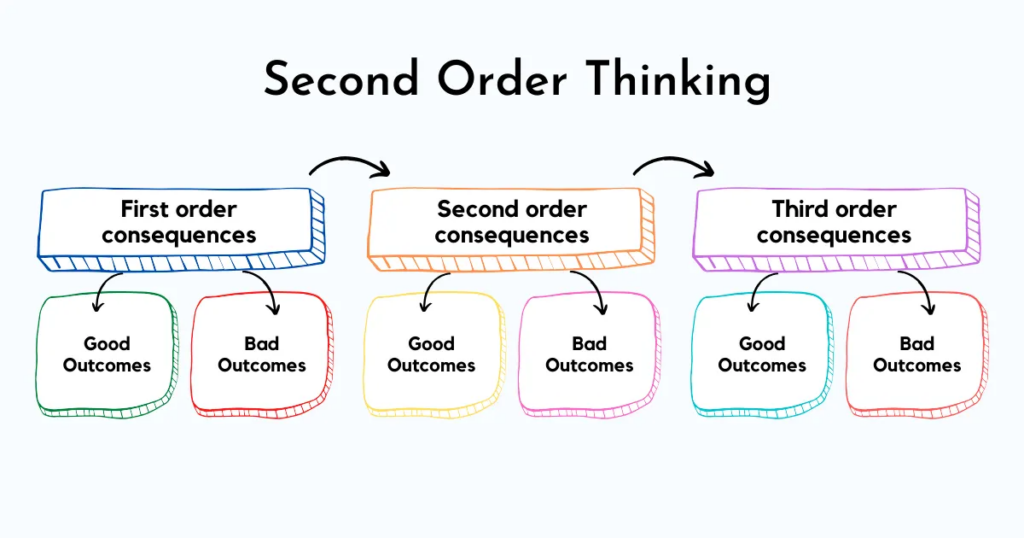
The same may hold true for ADHD treatment. Sure, methylphenidate, and particularly amphetamine (Adderall) or lisdexamphetamine (Vyvanse), might have direct negative effects on your brain health (discussed here). But if taking these substances results in you consuming less junk food, playing fewer video games, keeping a more regular sleep schedule, and reducing weed consumption, then the overall effect on your health is vastly net positive, even if the intervention per se has deleterious effects.
For the same reason, I am often flabbergasted when people refuse to take GLP-1 agonists because they might lead to a small uptick in thyroid cancer and carry a tiny risk of pancreatitis. Even if both claims were true (postmarketing surveillance does not show a clear signal), net is what counts. They lead to big behavioral changes, including less junk food consumption, which is a huge effect on your health. They also reduce food noise and therefore free up mental energy, which you spend on working on your business, which leads to greater financial gain, which you can then feed back into your health (a cleaner apartment, better doctors, etc.). The net outcome for your health is positive.
In my opinion, these indirect effects are often neglected. The effects on your behavior often have much more powerful net effects on your health than the direct health effects themselves. Interventions should therefore not just be evaluated in terms of “what does this do to the organism directly?”. We are not organisms in a lab (unless you are Bryan Johnson, my thoughts here). And if you actually are Bryan Johnson, then sure, it makes sense to stop GLP-1 agonists because they increase your abysmally low heart rate (driven to pathological levels by years of self-starvation) by 3 points.
But most people are not him, and for many a direct trade-off with health may be a very healthy thing to do because of the many indirect 2nd and 3rd order consequences resulting from behavioral change.
So far I have argued that even interventions that are directly bad for health can be net positive once you account for behavioral downstream effects. But there is a second, stronger point to make.
Life is not just about health. All I ever have is this very moment. My life consists simply of a string of present moments. Feeling slightly better in the present, and therefore by extension in my life, is not nothing. Would I sacrifice 10% of my health if I knew I would overall have 10% more area-under-the-curve well-being for life? Almost certainly.
Furthermore, what you create during these periods stays. For example, in my last year of med school I had to write my thesis, which I hated. Writing it was like writing a 50,000 word Substack article that 0 people read. I hated it so much that I hopped on modafinil and low doses of amphetamine (the only time in my life I had taken amphetamine for productivity) and wrote my thesis in 6 days. Sure, it was suboptimal for my health during those 6 days. However, the weeks and weeks of dreading and mental overhang (including cortisol secretion) and the many hours of time I freed up (which I could spend meeting friends, exercising, walking in parks, working on something that stimulates me) probably had a net positive effect on my health. And even if it did not, what I created during that time stays with me. In other words, someone building an online business while being jacked up on stimulants, if done smartly, might actually improve his health and/or life on net.
To summarize: interventions that look directly bad for your health are often net positive once you account for the behavioral 2nd and 3rd order consequences, and even when they are net negative, what you gain in present-moment well-being and in what you build during those periods is not nothing.
Weekly observations
This article was a weekly observation, shared via my newsletter. The full archive can be found here.
Disclaimer
The content available on this website is based on the author’s individual research, opinions, and personal experiences. It is intended solely for informational and entertainment purposes and does not constitute medical advice. The author does not endorse the use of supplements, pharmaceutical drugs, or hormones without the direct oversight of a qualified physician. People should never disregard professional medical advice or delay in seeking it because of something they have read on the internet.