
When I was a psychiatry intern, sometimes, people were admitted who experienced the deepest pits of depression and who were contemplating taking their own life. Sometimes doctors were successfully able to “stabilize” these individuals with the right combination of neuropharmaceuticals, and sometimes, after only a couple of weeks, they were much better.
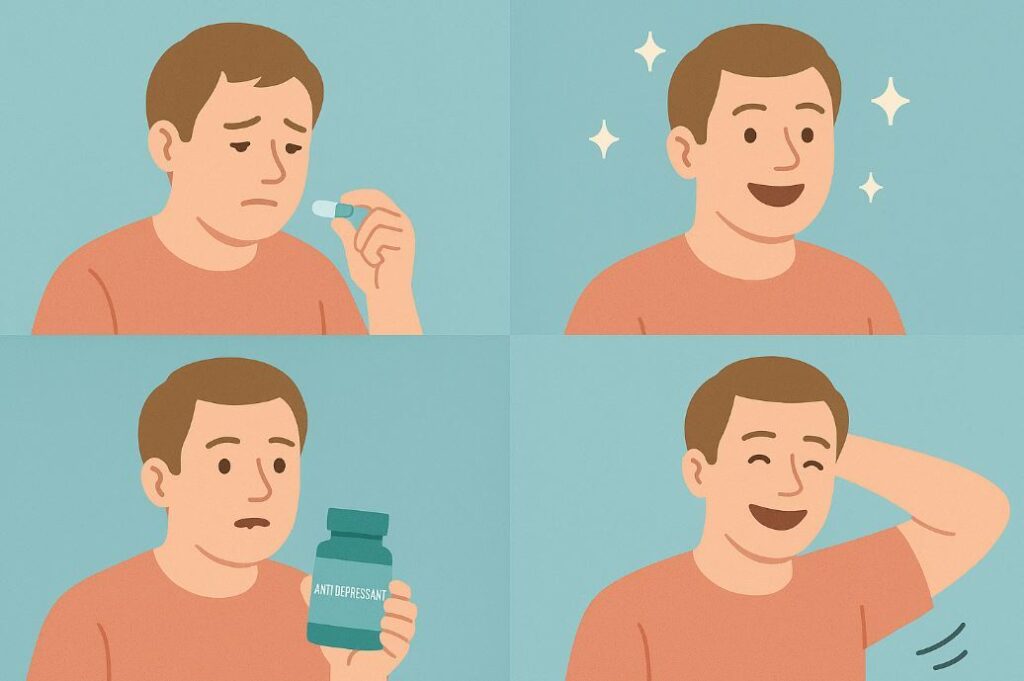
As their neurobiochemistry changed, quite often, they could seemingly not even relate anymore to how bad they felt just a few weeks ago. The hopelessness (it will never get better) and helplessness (there is little I can do about it) that had been there for years seemed to be have gone – at least for a short little while. This is not to say that psychiatry is great (in fact, there are many things wrong with it) but it is striking how quickly a deep existential crisis can be forgotten if neurobiochemistry changes a certain way.
A couple of anecdotes from my own life:
A couple of years ago, I had my first and only depressive episode. At the time, even though from the outside it did not seem this way, I wholeheartedly believed that my life was over and it was screwed for good. After starting vortioxetine, within a couple of weeks I could not even relate anymore to how bad it had been and to me it seemed it had always been this way. My experience with vortioxetine in more detail here.
In my early twenties, I tried to keep body fat levels much lower than I should have. I basically just endured intense hunger and fought a lot of counterregulatory measures (e.g., low energy, low libido) for 3-4 years. Even gaining weight did not help and some of the adaptations of starvation seemed to linger. I then started semaglutide, and the hunger, which had been a significant component of my daily life for years, vanished within a couple of days. Initially, I was blown away by the strength and the “lifechanging-ness” of the effect. I remember walking through the city and just being overcome with euphoric gratitude for the invention of semaglutide, which improved my life by at least 30-50% from the get got. After only a couple of weeks, I had gotten totally used to my new state and it was hard for myself to remember how I had felt before. My experience with semaglutide in more detail here.
In my early 20s, I was very into STEM fields. I had developed a habit to mentally repeat things after I had learned them. However, while effective, it got out of hand. Sometimes I would sit there with friends and instead of being present, I was in my mind OCD-like repeating facts and things I had learned that day. I remember being in the gym in the midst of an intense workout, “having to” stop my workout, sitting down on a bench for 10 minutes and going over the things I had learned this day about basal ganglia circuitry. At the time, I knew that what I was doing was irrational and that it overall took more than it gave, nonetheless, I could not help it. This was quite debilitating and it bugged me, however, I could not help it but continue doing it. For other reasons, I started to experiment with moclobemide. Literally from one week to the next, a habit that I had been doing day in day out for perhaps two years simply went away – automatically. After only a month or so, my habit of mental repetition seemed like a distant dream and had not returned even after I had stopped the moclobemide. In all instances, once I got to a new state, I got used to it quite quickly and I seemed to have forgotten the old one quite quickly. I find this topic so fascinating (and shocking) that I plan on writing a more in-depth article about this soon.
Weekly observations
This post was sent out to my newsletter subscribers as a Weekly Observation, one of which I share in my newsletter every week. You can find the full archive here.
Disclaimer
The content available on this website is based on the author’s individual research, opinions, and personal experiences. It is intended solely for informational and entertainment purposes and does not constitute medical advice. The author does not endorse the use of supplements, pharmaceutical drugs, or hormones without the direct oversight of a qualified physician. People should never disregard professional medical advice or delay in seeking it because of something they have read on the internet.