
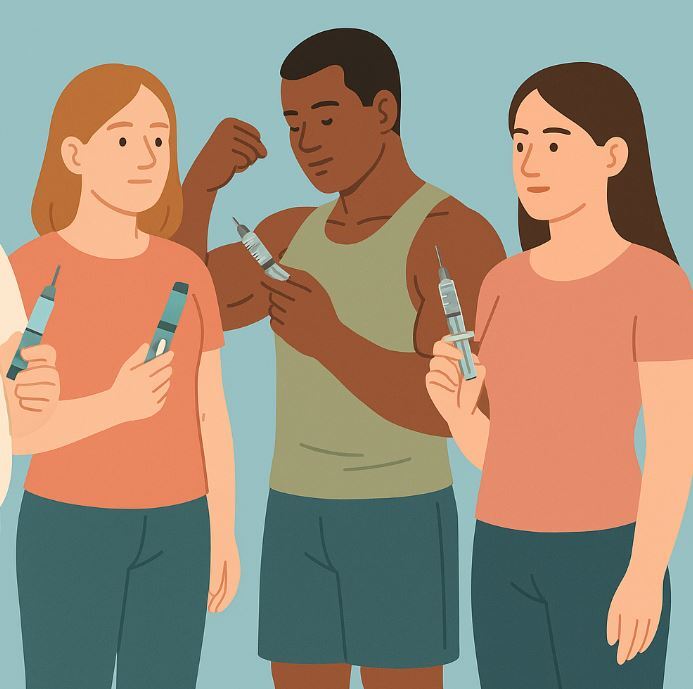
A lot of people nowadays go to long efforts to look a certain way. About 3-4 Mio. people in the US are estimated to be on anabolic steroids, which is probably about 10% of males between 20 and 50 years. About 1 in 8 US adults has experimented with GLP-1 agonist drugs. Research shows that weight loss is considerably more motivated by looks than by health. Cosmetic surgery rates are soaring like crazy.
People want to look better partly to have it easier in life (”pretty privilege”), partly to be more attractive to their sexual target audience, and partly to feel better in their own skin.
Given these reasons, it is a mystery why cosmetic neuropharmacology is not more popular. In my opinion, how you feel on a daily basis blows how you look on a daily basis out of the water in terms of “having it easier in life”, feeling more comfortable in your own skin, and perhaps even sexual attractiveness.
In the same way that my “core” looks are determined mostly by my genetics, I can improve them pretty significantly via looksmaxxing. Similarly, my “core” personality & vitality are mostly determined by genetics, but I can improve it pretty significantly via lifestyle and biochemical interventions.
In my opinion, life is (also) about creating yourself. With the smart use of neuropharmacology I can subtly “tweak” my personality, well-being, and “how I see the world” to my liking – given that it is done correctly.
For example, whenever my dopamine is high (e.g., selegiline, testosterone), I want progress. Conversely, whenever my serotonin is high (e.g., moclobemide) I am more content in the here and now. By manipulating these neurotransmitters, I can manipulate my wanting for progress vs. now – i.e. I can even meta-manipulate my preferences to some degree.
I generally find that microdoses of molecules are more suited to this than clinical doses.
Among them, I experimented with microdoses of a lot of molecules but few of them have stood the test of time, usually because even microdoses were too powerful and non-subtle. Moclobemide was a great all-rounder. On it, I had slightly better energy and mood and I was less “extreme”. However, it reduced my cognition quite a bit, which made me stop it. If I had to take a monoaminergic drug on a daily basis, it would be moclobemide (my experience in more detail). Rasagiline was too powerful. Escitalopram was pleasant but reduced emotional intensity. Modafinil made me productive but too robot-like. Bupropion was nice (particularly the increase in energy) but it slightly reduced my ability to think laterally, presumably because it stabilizes prefrontal attention pathways.
My current protocol includes only 4 molecules that affect my neurobiochemistry. I use pitolisant to be about 10% more awake than I would normally be (10mg in the morning). I use NSI-189 to feel stronger emotions (30mg before bed). I use HCG to squeeze more juice out of life (100IU before bed). Multiple times per week I take a low dose of yohimbine whenever I need an energy boost (basically my caffeine-replacement).
I am doing all these things partly for the same reasons people use cosmetic interventions for – interventional prettification aiming to have a better life.
Weekly observations
This post was sent out to my newsletter subscribers as a Weekly Observation, one of which I share in my newsletter every week. You can find the full archive here.
Disclaimer
The content available on this website is based on the author’s individual research, opinions, and personal experiences. It is intended solely for informational and entertainment purposes and does not constitute medical advice. The author does not endorse the use of supplements, pharmaceutical drugs, or hormones without the direct oversight of a qualified physician. People should never disregard professional medical advice or delay in seeking it because of something they have read on the internet.