
Mental health is the strongest predictor of life satisfaction and explains twice as much as the second strongest factor (physical health).
Tactics I follow to promote mental health
- Vitality
- Sleep
- Human connection
- Purpose
- Mindset
- Sex
- Gratitude
- Meditation
- Exercise
- Supplementation
- Neuropharmaceutical
Vitality
I believe that the most important condition underlying mental health is “baseline vitality” (energy levels, mood, health). Improving physical health will improve mental health as the mind emerges from the brain, which is part of the body. I discuss baseline vitality here.
Sleep
- Good sleep improves all aspects of my health & well-being. If my sleep is crap, everything is crap.
- For me, regularity is key. Going to bed at the same time every day (+/- 30 minutes) improves all aspects of my sleep.
- Light is picked up by the retina and transmitted to the brainstem, where it interferes with sleep even if I do not consciously notice it. I use blackout curtains & magnetic tape.
- The same is true for sounds. Noises impair deep sleep even if I am not aware of it. Using earplugs has considerably improved my sleep quality.
- Whenever I go to bed in a cold environment, I fall asleep faster, and I sleep better. Year-round I use a cooling blanket made of nylon and polyethylene. I also use sheets made of silk, which keeps my body cooler.
- I expose myself to bright blue light in the morning. I have a custom-built setup that produces 60.000 lux at a distance of 3m (about 6x as much as light therapy lamps at a distance of 30cm). Will post about in the future. This not only helps with the entrainment of my circadian rhythm, but also improves my sleep, hormones, energy levels, and mood.
- In the past, I abused melatonin as a sleeping pill. However, I stopped using it as it might blunt the secretion of multiple other hormones.
- Before sleep, I take 5 grams of glycine and 400mg of magnesium, both of which improve my deep sleep slightly.
- Occasionally, I use a low dose of a sleeping pill. At the moment, I use daridorexant perhaps once a month and a microdose of zolpidem whenever I have a night-shift in the hospital.
Human connection
I am looking to be loved, to be appreciated, to matter. And a lot of things I think and do are probably rooted in this core desire, which is deeply ingrained in human biology and survival instincts.
Throughout our evolutionary history, a member of Homo sapiens left by itself was doomed to die since it did not have access to tribe-provided stuff such as food, shelter, warmth, protection, and mates. Everything related to its survival was found within and through the social domain, which is still true today.

Therefore, evolutionarily speaking, belonging to a tight-knit group and having deep connections with others was (and still is) of existential importance to humans. When a human being lacks it, the brain evolved to respond with feelings of distress (loneliness) in the same way it evolved to respond with feelings of hunger and thirst whenever there is a shortage of food or water.
Conversely, humans who are part of a community are rewarded with feelings of deep well-being in an analogous way evolution rewarded humans with short-term pleasure from sugar or sex.
In a similar way that hypothalamic cells measure energy intake and determine appetite vs. satiety (POMC neurons), new research suggests that there is something similar for regulating “social satiety”, including “rebound socialization” after prolonged social isolation in rats.
This has been proven in rodent species and a certain group of hypothalamic neurons responsible for regulating social behaviors (MPV neurons) has been identified. These neurons are intimately connected to oxytocin and vasopressin neurons.
In the human brain in particular, large parts of the brain are specifically designed for dealing with social stimuli, hierarchy negotiation, status concerns, and keeping score of social relations.
Unfortunately, today’s society doesn’t facilitate the same kind of camaraderie and sense of community that humans are likely wired to require. The recent rise of individualism with a focus on status and self-esteem surely did not help. This has left many people feeling empty and lonely.
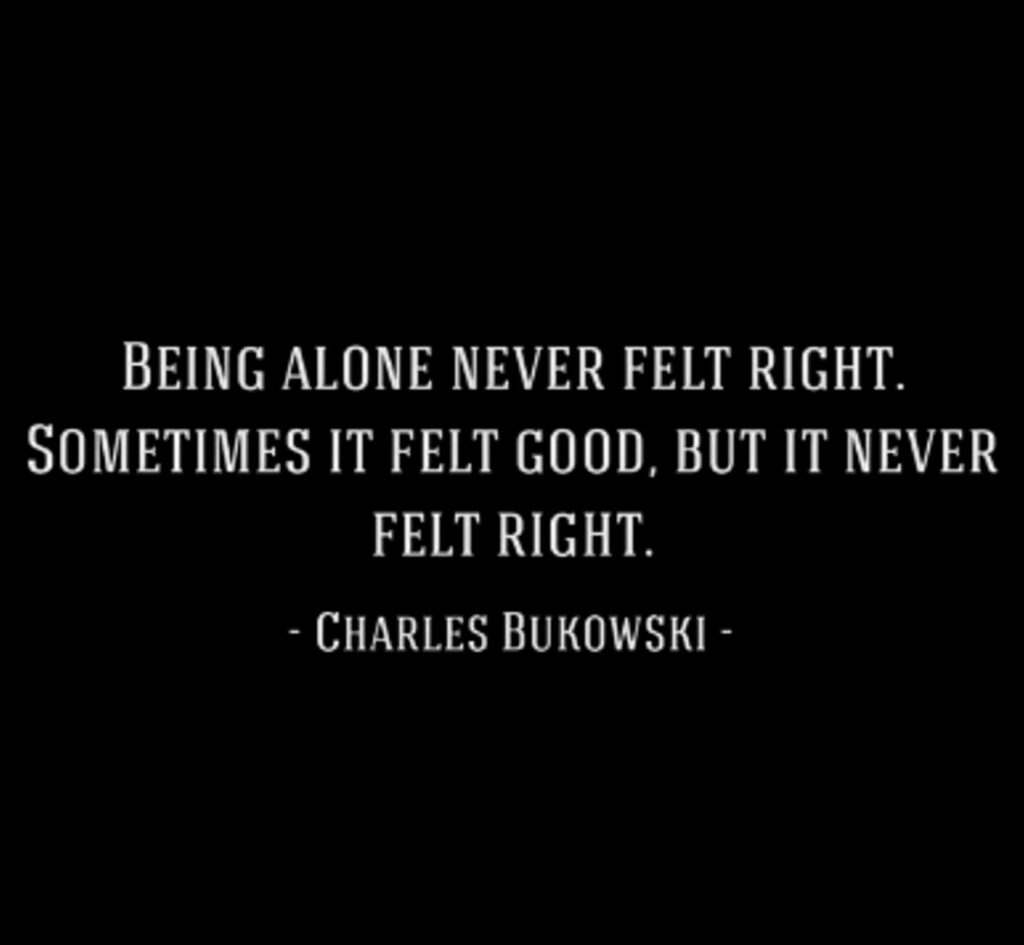
From the available research it seems that having high-quality social ties is associated with better health and a longer life expectancy – though admittedly the effect is probably not as direct as it may seem due to possible confounders being at play such as healthy and vital individuals being more likely to have high-quality connections.
Regardless of putative effects on health and lifespan, having high-quality relationships is an important factor for mental health and well-being, probably even exceeding exercise or sleep. Said another way, individuals with great human connections but “bad” sleep and exercise habits may be happier than individuals with poor human connections but otherwise “great” lifestyle habits.
As Mark Manson expresses it: “And just like a beaver must build a dam to truly express his beaverness, humans must form social bonds to fully express our humanity.” Or as Johann Hari puts it, just like bees evolved to live in a hive, we humans evolved to live in a tribe. If we disband our tribes, we pay a price.
In my early twenties, I used to be quite introverted and prone to spending most of my time on “my things”. Over the last couple of years, I was fortunate enough to find my tribe of people who I can connect with in a deep and genuine way.
Having found my community is one of my biggest sources of fulfillment and has improved my life, productivity, and happiness in ways that are difficult to overstate. In a way, I would call it my most important “biohack”.
A note on status
Related to connection & belonging is the intrinsic human desire for status. This desire is highly biologically determined because, for millions of years, someone’s status in society determined preferential access to food, mates, and shelter. In fact, large areas of the human brain are dedicated to status & hierarchy negotiation, both of which are of essential importance for survival and reproductive success.
So, it is no surprise that a change in status would lead to a change in certain aspects of brain function. In fact, your (perceived) status in society has a strong influence on your neurotransmitters and neuroendocrine function (hormones). For example, in many primate societies (including humans), after males rise in ranks and become alpha males, testosterone and cortisol levels are known to rise. Similarly, depressed individuals often perceive themselves to be low status (and vice versa) – something known as the “rank order hypothesis of depression”.
A modern manifestation of this inherent drive for status is people’s desire to be “popular” on social media and the self-worth alterations by other people liking (or not liking) your content.
In this way, status (or the perception of one’s status) affects energy levels and mood through its effects on neurotransmission and neuroendocrine function.
And being low status is usually connected with poor mental health – and there likely is also some causality involved.
“Rank-theory hypothesis”
Some researchers speculate that depression may have proved useful in dominance conflicts that are unlikely to be won. According to the “rank theory of depression”, sustained melancholy, withdrawal behavior, and a fixation on personal shortcomings and insufficiencies may ensure that the weak “keep their heads down” and don’t overreach themselves, which may prove evolutionarily fatal.
The rise of depression and anxiety in young people coincides with the advent of social media, and there is probably a causal connection at play. Social media constantly floods people with “evidence” that many others have it better. I like what Naval Ravikant has to say about it: “Social media make celebrities of all of us. And celebrities are the most miserable people on Earth.”
According to this theory, depression may represent a fitness-enhancing adaptation to group living. Indeed, if individuals are “losing” in life, they are more likely to develop depression. In support of this may also be the fact that adolescents are often depressed (because most adolescents are not on top of the hierarchy – aka the cool kids). Further support for this theory is evidence that antidepressants may overturn dominance hierarchies in relationships.

Mindset: The “Top-down” Component
I like to divide factors that influence my mind into “bottom-up” and “top-down”.
- “Bottom-up” factors are any biochemical changes that influence my mind, including neuropharmaceuticals, sleep, exercise, and hormones. Most of my blog is about bottom-up effects.
- “Top-down” factors are primary mental changes that then influence biochemistry but may also have non-biochemical effects.

In the following paragraphs, I describe my experience with top-down factors and the effects they had on my physiology.
On some days I am tired. If I then do something that excites me, such as having a deep conversation with a friend, it is always striking how this increases my energy and mood. In the same way that a good conversation can have a stimulant-like effect on me for a few hours, so can working on a project I burn for stimulate me for weeks to months. Biochemically, this is presumably mediated in part by a top-down mediated increase in a variety of neurotransmitters.
A few more examples:
- A decade ago, I used to be semi-depressed for about half a year or so because I was reducing myself, my thoughts, and my feelings to molecular biology. Then, simply learning about the concept of emergence was quite powerful in terms of boosting my liveliness. In other words, I boosted my liveliness from “within” the mind.
- The few times I fell in love with someone, I was always amphetamine-like stimulated for a couple of weeks, sometimes months. I was euphoric, needed less sleep, was less hungry, and had more energy. The neurobiochemical cascade of falling in love is characterized by higher levels of oxytocin, glutamate, and dopamine, among other things. Interestingly, falling in love is known to increase cortisol secretion by 40-100%.
- Before meeting one of my ex-girlfriends, I was in quite a bad place mentally. I was lonely, restless, and my “Urvertrauen” (trust in the Universe that things will be alright) was gone. I then saw somebody I was blown away by. I approached her and asked her out. On our first date, I knew that we would be a couple soon. After this date, my Urvertrauen was restored and all the restlessness, loneliness, and unease – that had been there fore months – was gone immediately, as if somebody had flipped a switch in my brain – even though my hormones or monoamines had not changed much. This change in how I felt was holding up for months. This was quite eye-opening to my bottom-up centered worldview.
- A couple of years ago, after one of my ex-girlfriends broke up with me, I was devastated for many months. In the same way that falling in love with her caused a hypomania-like state, losing her led to a state resembling true biochemical depression. The neurobiology of grief is thought to be characterized by an altered monoamine transmission and a dysregulated neuroendocrine control (hormones), among other things.
- In the past, days before a major exam, I was often super stressed, and many aspects of my mental and biochemical functioning were altered. These included heart rate changes, increased sweating, and even altered gut motility.
A few more non-personal examples:
- The placebo effect is a prime example of a top-down effect. The placebo group in antidepressant studies usually measurably improves in a variety of domains. Similarly, being hopeful or simply believing in something can have measurable physio-biochemical ramifications.
- For many people, unresolved trauma can have massive effects on neurobiology, endocrine function, and physiology – sometimes for years.
- Children that are mistreated or neglected sometimes fail to thrive (to grow properly). This form of “psychosocial dwarfism” can occur even when adequate caloric intake is provided.
- In orangutan tribes (orangutans are somewhat closely related to humans), there is only one alpha male and something about the sheer presence of an alpha male has other male orangutans growth-suppressed (it is thought that his screams play a role). After the alpha male dies, the growth-suppressed young orangutans suddenly go through puberty. This means that puberty was induced from “within the mind”. And the alpha male grows two flangs on the side of his cheeks. Something in his brain is sensing his alpha-male status leading to specific physiological changes that are reserved for alpha males.
In all of these instances, biochemical changes are induced “top-down” (from within the mind) solely due to “information”. It is therefore not too far-fetched to claim that, for example, having a pessimistic or nihilistic mindset can sustainably alter monoamine transmission and hormones, and presumably things that are even “deeper” (e.g., gene expression), negatively (which then in turn favors a nihilistic or angst-ridden mindset).
On the other hand, it has been shown that positive thinking, gratitude, optimism, or “purpose” can have striking effects on neurobiology, endocrine function, and physiology. (This is not to say that biochemical enhancement is not useful in finding purpose, love, or developing an optimistic mindset in the first place.)
Andrew Huberman and Jordan Peterson discuss the influence of “purpose” and “meaning” on dopaminergic neurotransmission here.
The main point of this entry is basically that mental health can be quite deeply affected by not just changes that are bottom-up (e.g., altering hormones or neurotransmitters trough lifestyle of exogenous molecules) but also by more “psychological” changes (i.e., information), which eventually affect deep material processes within the brain, and presumably also within individual cells. While this may seem “duh” to most people, for me, a biological materialist at heart, this was quite eye-opening to find out about – even though the biological mechanisms are far from being elucidated.
Purpose
After experimenting with all kinds of molecules, I found that, like human connection, purpose is the best antidepressant (reducing suffering & making me happy) as well as stimulant (giving me loads of energy & motivation).

Throughout most of my life, I had a sense of purpose, and whenever I was lacking it, vitality enhancement, with a special focus on dopamine always seemed to increase my chances of finding it again. However, out of all of the things on this website, purpose is probably the hardest one to get.
Here, I want to specifically mention psychedelics, which helped some of my friends a great deal in this regard. Next to having helped with getting unstuck in the egocentricity loop (“I am the center of the universe”), a friend who was gripped by a sense of meaninglessness came out of one session feeling part of something larger than himself. The effect catalyzed an upward spiral.
However, I also know people who were seriously harmed by psychedelics so they are best approached with the respect they deserve.
I discuss psychedelics in much more detail here.
Gratitude
For the past couple of months or so, I started doing a very simple 2-minute gratitude exercise whenever I enter a public transport vehicle, which is roughly twice per day.
I close my eyes and start to think of 5 things I am grateful for:
- #1: Something beautiful that happened today (e.g., That I had a great conversation while going for a walk with a friend.)
- #2: Something beautiful that is about to come later today (e.g., Going for my evening gym session.)
- #3: Something concerning my personal relationships (e.g., That I get along well with my siblings and that I even have them.)
- #4: Something big in my life (e.g., That I am allowed to work in a field that I am intensely interested in.)
- #5: Something beautiful this very moment (e.g., being without physical pain – something that is not as obvious as it seems for non-medical professionals)
The human brain is a pattern recognition machinery, trained to find patterns for things it is frequently used for. For example, if I train myself to look for people with red hair, it won’t be long before I see red-haired people everywhere. If I frequently play chess, my brain gets better at finding chess patterns.
Similarly, if I frequently think about things I could be grateful for, my brain gets better at “gratitude” simply because the responsible neural networks are trained every day to find “patterns” of things I could be grateful for.
The most important thing is that I really feel these things so that the emotions leave neural traces/imprints. I highly recommend the book hardwiring happiness.
Over time, these thoughts of gratitude came on much more readily – either spontaneously at random times throughout the day or specifically as an antidote to stress, worrying, or grudging. In both cases, these thoughts of gratitude reliably lift my mood and increase my well-being. This small habit of gratitude may be the single best habit I do in terms of effort and payoff.
Meditation
I meditate daily for 5-10 minutes, which is probably way too little. Meditation (supposedly) not only increases my emotional health, but it presumably also has a number of measurable longevity benefits.
- Firstly, the gain in the ability to concentrate decreases rumination by the simple fact that my mind jumps less. Since “a wandering mind is an unhappy mind”, this may have measurable benefits for cortisol levels, sleep, and blood pressure.
- Secondly, meditation increases mindfulness. The increase in mindfulness allows me to be less on autopilot and to increase my “window of agency” by not being constantly pulled in a million directions. This has implications for habits and behavior in general, both of which are tightly linked to the lifestyle choices I make and do not make on a daily basis.
Sex
Having good sex (for me, most important is emotional intimacy) is an important pillar of my well-being. A loss of sexual ability (e.g., Peronyie disease, severe sexual dysfunction, disfiguring injury) would therefore be a huge loss. I will post about penis health in the future.
Exercise
Exercise is great for brain health and well-being. Different forms of exercise have partially overlapping and partially independent effects. Benefits include a feeling of accomplishment, mitochondrial health, neurogenesis, upregulation of serotonergic & opioidergic tone for hours after, the social aspects, and positive feedback of looks on self-worth.
As with sleep, the time invested in exercise has a high ROI on a number of domains, including my mental health, energy, mood, creativity, looks, and happiness. Furthermore, exercise is among the healthiest things I can do for my brain. In this section, I will discuss the effects of exercise on vitality and mental health only.
There is a neurobiochemical reason for the saying “You are only one workout away from a good mood.”.
- Firstly, during intense exercise, the “nasty” kappa-opioid system in the nucleus accumbens shell (the brain’s major hedonic hotspot) is activated, which mediates the subjective experience of discomfort. However, as a counterregulatory mechanism, the “feel-good” mu-opioid system is activated and remains activated for a couple of hours after
- Secondly, exercise boosts noradrenaline and cortisol, both of which increase central nervous system “readiness” for a couple of hours.
- Thirdly, exercise increases serotonin transmission for many hours to come. Whenever vertebrates exert themselves intensely, serotonin levels rise, in part to signal to the animal “Hey, chill down.” This prolonged rise in serotonin, which presumably serves self-protective purposes, is another main reason intense exercise makes me feel good for the entire day.
- Fourthly, exercising makes people proud of themselves and gives people a feeling of accomplishment, which is also important for mental health.
These neurotransmitters are discussed in more detail here: An Introduction to Neurotransmitters
Exercise makes me feel and function so well that I would even do it if it did not have any other beneficial long-term effects – which it undoubtedly has.

I particularly appreciate its beneficial effects on both short-term brain function as well as long-term brain health. My nervous system is the basis of everything I think, do, and feel, and few things improve it as much as regular exercise.
- Exercise stimulates the release of nerve growth factors such as BDNF & VEGF. In fact, it seems to be one of the most neurogenetic interventions available to mankind – endurance exercise more so than resistance training.
- Regular vigorous exercise promotes cell proliferation in the hippocampus, which enhances mood, memory, and cognition. In part because of this, exercise is probably among the most powerful tools I have to stave off cognitive decline.
- Exercise stimulates the locus coeruleus, the brain’s major source of noradrenaline, and causes this collection of cells to increase in size and baseline activity. Therefore, over time, exercise really does lead to a more alert brain and the reason is a long-term structural change (or better, a combination of multiple structural changes).
- Exercise increases brain oxygenation and improves sleep, both of which are crucial to brain health.
Through the combination of these short-term and long-term effects on the brain, exercising regularly improves energy levels, mood, and cognition, and also slows the rate of neurocognitive decline.
There are all sorts of other reasons (beyond brain health) why exercise is powerful beyond belief. Exercise improves sleep, hormones, insulin regulation, nutrient partitioning, and musculoskeletal health. Exercise is also one of the most potent interventions available to slow neurocognitive decline.
Regular vigorous exercise also causes hundreds of changes in gene expression, affecting almost any level of physiology, biochemistry, metabolism, and health.
If family or friends ask me about the single most important thing they can do to improve their health and vitality, my answer is always the same: sleep & exercise. Of note, the exercise recommendations by official health agencies are pathetically insufficient for it to have the vast benefits it could have.
Supplementation
I make sure I do not have any vitamin or mineral deficiency. Furthermore, I take a couple of supplements that might have favorable effects on mental health. I discuss the supplements I take, and why I take them, in more detail here.
Neuropharmaceuticals
A few years ago, I started using the adaptogens ashwagandha and rhodiola during a time I was very stressed. Because I had already decided to go down this route (namely trying to alter my mood with the introduction of foreign molecules), from an ethical perspective the argument was already settled.
To me, there is no difference between natural (“good”) vs. synthetic (“evil”) molecules, so I decided to switch to neuropharmaceuticals instead. Given that the modern world is a minefield and not very conducive to mental health, in my opinion, living in the modern world is just as unnatural as using pharmaceuticals to better navigate it.
I experimented with numerous neuropharmaceuticals, but few to none stuck. I describe the neuropharmaceuticals I experimented with in more detail here.
My Longevity Protocol (Long & Technical Version)
This article is part of a much larger post describing my complete longevity blueprint. For my full protocol, read here.
Sources & further information
- Opinion article: What Kind of Antidepressant Should I Take?
- Scientific article: Can meditation slow rate of cellular aging? Cognitive stress, mindfulness, and telomeres
- Scientific article: The efficacy and safety of nutrient supplements in the treatment of mental disorders: a meta-review of meta-analyses of randomized controlled trials
Disclaimer
The content on this website represents the opinion and personal experience of the author and does not constitute medical advice. The author does not endorse the use of supplements, pharmaceutical drugs, or hormones without a doctor’s supervision. The content presented is exclusively for informational and entertainment purposes. Never disregard professional medical advice or delay in seeking it because of something you have read on the internet.
Subscribe to the Desmolysium newsletter and get access to three exclusive articles!