
My current skin care routine includes only 2 things. Firstly, sunscreen. Secondly, a retinoid. I believe these two interventions have the best risk/effort/cost-benefit ratio of all skin interventions.
Sun has ionizing radiation (mostly in the UV spectrum) and can destroy proteins, DNA, and other macromolecules. It can also lead to crosslinked collagen and elastin, which have a half-life of many years. Using sunscreen daily is the most effective way to prevent skin aging and keep skin quality high. I use SPF (sun protection factor) 50 sunscreen on most days (other than on winter days I am mostly inside).
An SPF 50 means if your unprotected skin would start to burn after 10 minutes in the sun, then with SPF 50 applied correctly, it would take roughly 50 x 10 = 500 minutes (8 hours+) to burn. UVA radiation (the main driver of photo-aging) penetrates clouds and glass, and it is relatively steady year-round, even when UVB (burning) is low. If you are outside 30 minutes or more per day, you benefit from sunscreen. Is SPF 50 overkill? No, in real life, an SPF 50 applied thinly often performs more like SPF 20 to 25. Somebody who uses sunscreen every day will have much better looking skin than somebody who does not 10 to 20 years from now.
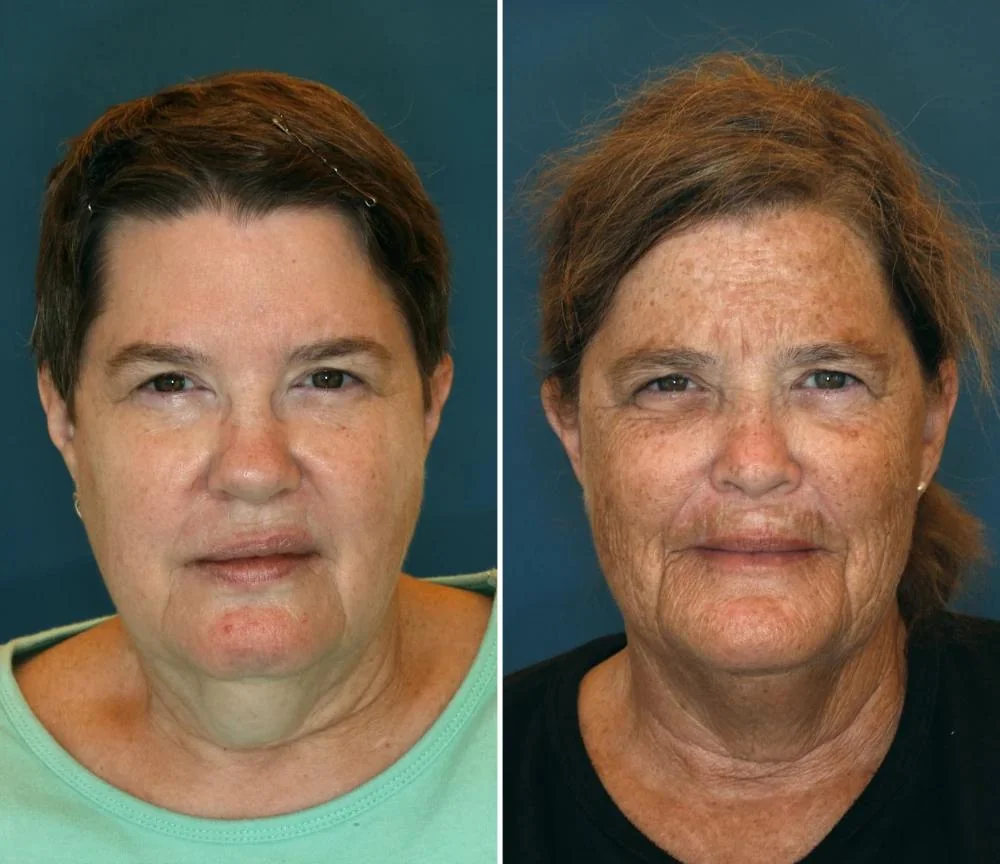
Bewlo is a picture of identical twins. One was wearing sunscreen consistently, the other was not.
My sunscreen also contains ceramides and niacinamide, both of which have great effects on the skin in addition to the UV-protection.
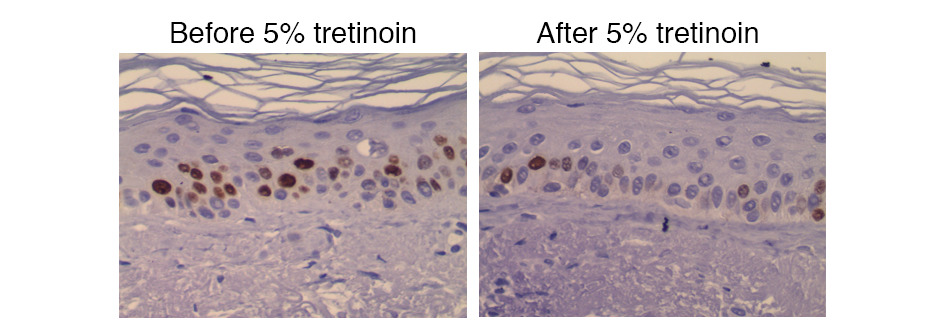
The same holds for retinoids. Retinoids (vitamin A derivatives such as tretinoin, adapalene, retinal, and retinol) act by binding to a certain group of nuclear retinoid receptors in keratinocytes (the cells that create the “barrier”) and fibroblasts (the cells that synthesize the skin matrix). Nuclear receptors (such as the androgen receptor, the glucocorticoid receptor, or the retinoic acid receptors), when activated, alter directly how keratinocytes and fibroblasts behave by changing the expression of a large number of genes. Essentially, they stimulate keratinocytes and fibroblasts to behave in a “younger” way. Among other things, this reflects in increased synthesis of many skin components (e.g., collagen, elastin, glycosaminoglycans, fibronectin, antioxidant enzyme systems, reduction in metalloproteinase expression, etc.) and increased cell turnover. This results in smoother texture, fewer wrinkles, more even tone, and reduced acne.
I started using retinol half a year ago. Initially, there was some peeling and itching for 3 weeks or so. Thereafter, no side effects. A month ago, I switched over to retinal 0.1% (which is stronger than retinol because it needs one instead of two enzymatic steps), no side effects. The only side effect I have thus far: if I apply retinoids too close to my eyes, my eyes get really dry and somewhat inflamed. Therefore, I do not use it in the periorbital region.
My skin looks essentially the same as before, because I always had very good skin, but it will make a difference over time (years). The early bird gets the worm.
In a month or so I will switch over to retinal 0.2% for 1 to 2 months. Thereafter, I will switch to adapalene (prescription). After a couple of months on adapalene, I will switch to tretinoin (the most potent retinoid), if my skin can tolerate it. However, I am fine with stopping at adapalene.
Adapalene is a synthetic retinoid that selectively targets the RAR-β and RAR-γ receptors, which are primarily found in the skin. In terms of potency, adapalene is roughly 60 to 80% as effective as tretinoin for photoaging. This selectivity makes it gentler and less irritating, while still effective for acne. Tretinoin, a natural form of retinoic acid, binds to all three retinoic acid receptors (RAR-α, RAR-β, and RAR-γ), giving it broader and stronger effects on cell turnover and collagen production, but also a higher risk of irritation.
In terms of potency for combating photoaging, tretinoin has the strongest evidence for collagen stimulation, wrinkle reduction, etc. Adapalene (0.3%) is roughly 60 to 70% as strong. It leads to less collagen remodeling but is much better tolerated and stable in light. Retinal has a potency of 40 to 50% compared to tretinoin, and retinol has a comparative potency of 10 to 20%, mostly good for beginners or very sensitive skin. I am currently at the retinal 0.1% stage.
Accutane (isotretinoin) is the oral version but has systemic side effects (including mental side effects), and therefore should only be used for severe acne.
At the moment, I apply tretinoin 0.05% at night and SPF 30 in the morning. Sure, one could go much deeper (e.g., vitamin C serum, peptide sera, etc.), but I believe that, next to regulating insulin sensitivity and hormonal health, combining sunscreen with a retinoid will deliver a big proportion of what a much more extensive (and expensive) skincare regimen can do.
Weekly observations
This article was a weekly observation, shared via my newsletter. The full archive can be found here.
Disclaimer
The content available on this website is based on the author’s individual research, opinions, and personal experiences. It is intended solely for informational and entertainment purposes and does not constitute medical advice. The author does not endorse the use of supplements, pharmaceutical drugs, or hormones without the direct oversight of a qualified physician. People should never disregard professional medical advice or delay in seeking it because of something they have read on the internet.