
My grandpa recently died. He was in otherwise good health, but his hip joint was a mess due to years of hard work at his farm. Unfortunately, he was denied hip replacement. Consequently, he had a hard time walking and he started to just lie around in his living room (whereas before he was decently active). Not even one year later he died mostly because his cardiovascular system had deconditioned (“use it or lose it”) exacerbating congestive heart failure.
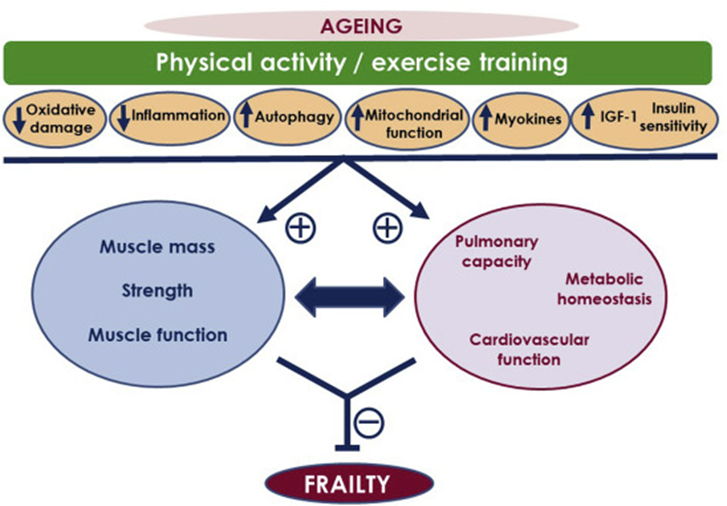
Similarly, even if metabolic health, neurobiochemistry, and what have you were “perfect” (whatever that means), if I am prevented from moving properly or exercising, a lot of the other systems will degenerate – let alone my quality of life.
Musculoskeletal health is at the very center of longevity. In fact, to live a long, happy, active life, adequate health & function of the musculoskeletal apparatus are essential.
Tactics I follow to promote musculoskeletal health
- Keeping an eye on anabolic hormones
- Different forms of exercise
- Zone II cardio
- HIIT
- Resistance exercise
- Stability & mobility
- Interrupting sitting
- Experience with anabolics
- Healing injuries
Keeping an eye on anabolic hormones
A couple of years ago I was starving myself like Bryan Johnson, in part out of vanity, and in part because of online “health” advice applied in the wrong context. My IGF-1 was fairly low, my testosterone was very low, and my estradiol was abysmal. Doing a lot of (heavy) exercise in that state was a recipe for disaster, and I sustained repeated micro-injuries. Now, I make sure that my anabolic hormones (essentially IGF-1 & testosterone) are adequate to high-ish.
I am on my TRT lite regimen, which gives me testosterone and estradiol levels near the top of the reference range – discussed here. I also take a babydose of oxandrolone (discussed below).
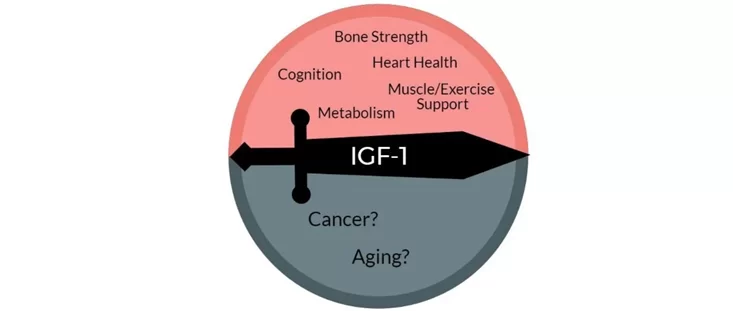
Fortunately, since I vastly increased my caloric intake, my IGF-1 levels are naturally slightly above the reference range, at the top of the reference range for a 25-year old (which is probably the ideal range to keep for life). The upsides of IGF-1 include stronger immune function, greater vitality, less neurodegeneration, less “wear and tear” due to better repair systems, greater bone mass and muscle mass. The downsides include a slightly higher speed of aging (on paper) and a small increase in cancer risk. In my opinion, high IGF-1 levels blow low IGF-1 levels out of the water.
I engage in different forms of exercise
The body’s response to high-intensity interval training versus strength training versus purely aerobic exercise is very different. Therefore, I engage in different forms of exercise:
- resistance training (3 times per week)
- steady-state cardio in the zone II range either on an exercise bike or outdoor run (2x/w)
- brief high-intensity cardio after each zone II session (2x/w)
- occasionally sports games with friends (but I do not count these as exercise)
While some effects of the different kinds of exercise are universal and overlapping (e.g., improving metabolic health, brain health, cardiovascular health, sleep, and well-being), different kinds of exercise have non-overlapping individual effects as well.
For example:
- High-intensity exercise or HIIT induces antioxidant systems more than other forms of exercise.
- Low-intensity endurance exercise is much more than just “burning calories”. It specifically improves capillary density & flexibility, as well as mitochondrial number & function.
- Low-rep range heavy resistance training particularly improves myofibrillar density and contractility. It builds strength and mass.
- High-rep range resistance training leads to an increase in sarcoplasmic muscle growth and a host of muscle-related metabolic adaptations.
It is probably best to include all different forms of exercise, given the partially non-overlapping benefits. I discuss now all of them in a little more detail.
Zone II cardio
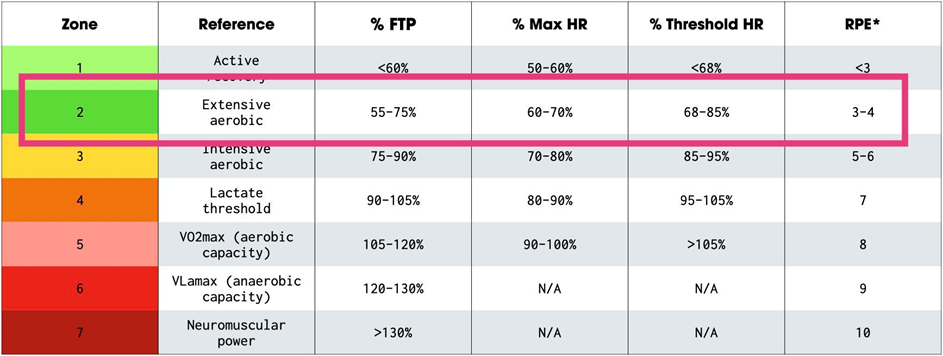
Zone II cardio improves mitochondrial health, metabolic health, and brain health. The idea is to train at low intensity (rule of thumb: heart rate of 180 minus age) for at least 40min per session.
Below is a screenshot from my Polar data of what a zone II session looks like for me (I usually end with a 5-minute high-intensity part). My average heart rate is between 70-80% of my maximum heart rate (which is a tad under 190bpm).

Zone II exercise is any type of cardiovascular exercise performed right at the cusp before lactate starts to accumulate. Said another way, it is exercise during which oxidation of fatty acids is at the maximum. Through a variety of signaling pathways, zone II exercise stimulates mitochondrial function and mitochondrial biogenesis, which vastly improves metabolic health through a variety of mechanisms.
High-intensity exercise
I end each endurance session with a 5 minute high intensity session. It would probably be better to do a dedicated HIIT session once per week but I dread doing that. At the end of my 5 min high intensity session, I am sometimes near the point of absolute failure (“almost puking”). Repeating this 4x in a row? Fuck no. (The ideal high intensity session would look like: 4min all out effort –> 4 min low effort –> repeat 4x.)
So I find a single bout of a couple of high-intensity minutes a good tradeoff between “what works” and “what am I willing to stick to”. A medium program I stick to consistently is much better than a perfect program that I do not stick to.
It is thought that high-intensity exercise is great for optimizing neural health (e.g., BDNF & VEGF expression) and upregulating body-wide antioxidant systems due to the short oxidative burst during peak activity. Due to the principle of hormesis, this means that there will be less oxidative stress at baseline.
High-intensity sessions also improve VO2 max, which has a host of other benefits on pretty much everything related to health, longevity, and well-being.
Subscribe to the Desmolysium newsletter and get access to three exclusive articles!
Resistance exercise
Resistance exercise builds and maintains muscle mass. Besides the effect of muscle on how others perceive you (looks) and how you perceive yourself (self-esteem), muscle mass is highly correlated with strength, which is highly correlated with longevity and quality of life.
Moreover, the more muscle mass someone has when they are young, the more of it can be maintained into old age (maintaining muscle is easier than building it), which not only prevents falls and fractures but also increases quality of life and the range of activities someone is capable of doing.
Furthermore, next to looks and structural integrity, having a decent amount of muscle mass is also highly beneficial from a metabolic perspective, particularly in terms of insulin sensitivity.
I do some form of resistance exercise three to four times per week and I alternate between lower body and upper body days.
I usually do one to two drop-sets for each muscle group, totaling about 12-15 exercises per session. I start with the heaviest weight possible (for 4-6 reps) and go until (almost) failure. Then, without any rest, I immediately lower the weights by around 10% and go again until (almost) failure.
I repeat this process until I have decreased the weight by around 5-10 times. I believe that this gives me the best bang for the buck because it hits myofibrillar muscle growth + sarcoplasmic muscle growth + while also being a degenerate form of cardiovascular exercise.
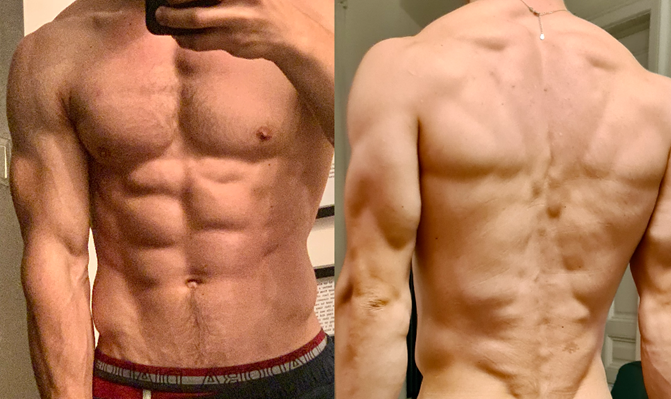
Thanks to a low daily dose of metreleptin, which allows me to keep body fat levels low without suffering the neurocognitive and endocrine consequences of starvation, I am able to keep a muscular and lean physique pretty much year round. Below is “peak” condition but is not too far off from my “normal” state. In my normal state, I have about 2% bodyfat more but the same amount of muscle mass. This would not be possible with GLP-1 agonists as they are insufficient to fully counteract the hypoleptinemia associated with low body fat levels. I discuss this in more detail here: My Experience With Semaglutide.
A note on CrossFit
In the past I did CrossFit and I absolutely loved it. For me, CrossFit is a great “all-in-one”-solution as it combines stability, functional strength, low-intensity cardio, and a high-intensity metabolic conditioning part, all while being fun and social.
One major downside to CrossFit is that it gets a lot of people injured, and it might not be a great longevity sport. Fortunately, for the 1.5 years I have been doing it regularly I never got injured and interestingly, the knee pain I had before starting it has subsided. I only stopped because going to the CrossFit venue and back took too much time.
But I still sometimes miss CrossFit – especially the way it made me feel after. A good friend of mine says that before doing CrossFit his thoughts were 80% negative and 20% positive, and he claims that simply doing CrossFit flipped this ratio around.
Stability & mobility
At the end of my twenties, I can do a lot of dumb things incorrectly that will impair my joint integrity down the road.
Recently, I started to incorporate some more strategic forms of mobility training.
- I specifically strengthen my anterior tibialis (for knee health), my posterior chain (with a kettlebell), and my glute medius (with exercise bands), my hamstrings (in the form of nordic curls), and a couple of other “mobility” muscles. I specifically relied on the advice from Knee Over Toes Guy.
- Every day I stretch my hip flexors and the muscles of the quadriceps femoris, which tend to get tight.
Interrupting sitting
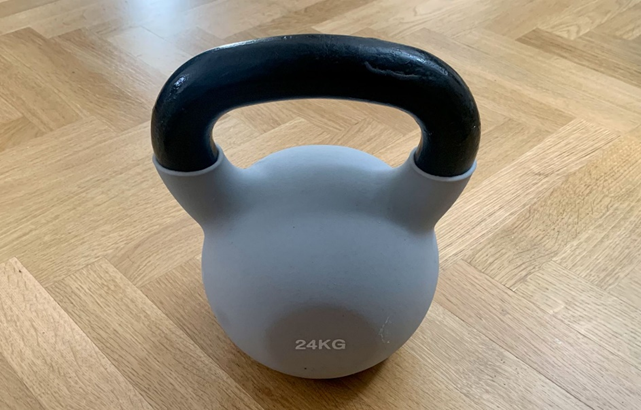
More of my day than I would like is usually spent sitting. I set a repeating alarm every two hours to incorporate multiple “exercise snacks”. These 2-minute-long bouts of exercise help me with alertness & cognition. My favorite exercise is kettlebell swings.
Kettlebell swings are great to spike my heart rate and to work my posterior chain, both of which are well-suited to counter some of the negative consequences of prolonged sitting.
Microdose of oxandrolone
Oxandrolone is an anabolic steroid. It is a DHT-derivative and therefore devoid of estrogenic and progesterone effects. Oxandrolone has about six times the anabolic potency of testosterone (anabolic-androgenic ratio of about 1:6 or so). Because it is not a substrate of 3α-hydroxysteroid dehydrogenase, it can exert its anabolic effects in skeletal muscle, unlike DHT, which is poorly active in skeletal muscle despite greater androgen receptor binding. DHT is broken down in muscle – as discussed here: My Experience With Finasteride
I take a microdose of oxandrolone (1.5mg/d) to help with adding some muscle (health benefits; vanity). While bodybuilders might find this dose laughable (as they generally use 10-50mg per day – often in combination with other anabolics), this was actually quite a decent anabolic boost considering that a healthy men´s natural T secretion is about 8-10mg per day (roughly 650-750ng/dl) and oxandrolone has an anabolic ratio of 1:6 – meaning that 1.25mg of oxandrolone (anabolic equivalent of about 6-8mg of testosterone) would almost double exposure to anabolic agents if my endogenous secretion did not decline (which is a big “if”).

I measured my blood three times. Even at this dose, oxandrolone slashed my LH, total testosterone, SHBG, and free testosterone by about 40% and, on paper, I was borderline hypogonadal (total testosterone of about 400ng/dl).
Interestingly, even such a microdose of oxandrolone caused me to shed about 1kg of water weight, which may have been due to a decrease in estradiol (or estradiol signaling). The combination of the slightly increased muscle mass and the slight loss of total body water caused me to look visibly more “cut” and bigger in a way that others were commenting on it, even though the scale was hardly affected.
While having no effects on liver enzymes and blood lipids, the effect on muscle mass was okay (about 2-3kg gain in lean tissue after about 3 months). However, I stopped due to its adverse effects on my endogenous sex hormones.
However, ever since hopping on my TRT lite regimen (which decouples my gonadal sex hormone secretion from hypothalamic input), I initially reintroduced it. On it, my liver enzymes and lipids are perfect, which would be my only concern. Last time I tested, my LDL-C was at 25mg/dl (I do take 5mg of ezetimibe). Then I stopped it again due to it potentially driving the visual aging process – even though less than DHT.
Healing bones
If I ever happen to have a broken bone or ruptured tendon, I will turn to teriparatide (PTH-analogue), which activates osteoblasts and chondroblasts, therefore slashing recovery time. It helps bones grow as well as tendons heal. I got this “tip” from an osteologist, who mentioned that a couple of his colleagues had used teriparatide after breaking their bones while skiing and that they (reportedly) all healed up like Wolverine.
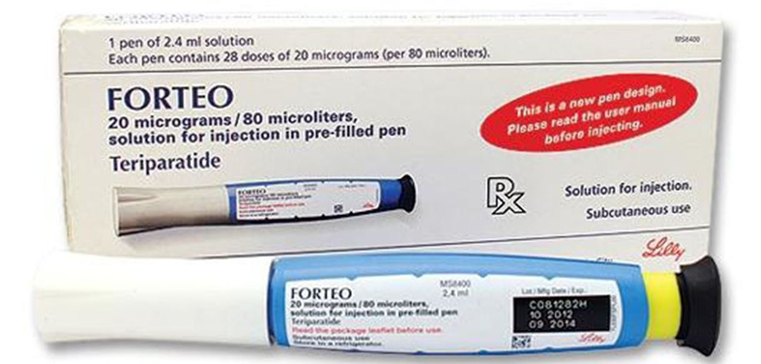
I suppose that the use of teriparatide is possibly widespread in professional sports Why else would professional athletes be so quick to be back on track? Hint: It is presumably not just massage therapy. Interestingly, neither the bro-science nor the bodybuilding community has gotten hold of this yet, while the use of potentially dangerous, questionably effective, and unregulated peptides with weird artificially scientific sounding names seems to be widespread. I discuss this in more detail here: Why I Do Not Use Peptides
My weak points
2 years ago (03/2024), I dislocated my left shoulder during a stupid iceskating stunt. I needed to go in for surgery and I recovered exceptionally well. However, unfortunately, I got reinjured twice (handstands before I was ready; aggressive chest flies), and ever since, my shoulder has not felt the same. I am currently taking a break from dedicated shoulder and chest training.
I also have easily inflammable patellar tendons, which I destroyed by running very fast with very bad shoes and terrible form (“heal striking”) for many years between the ages of 17 and 25. I am currently in the process of remodeling my tendon with the use of strategic isometrics.
My Longevity Protocol (Long & Technical Version)
This article is part of a much larger post describing my complete longevity blueprint. For my full protocol, read here.
Sources & further information:
- Podcast: Peter Attia – The importance of muscle mass, strength, and cardiorespiratory fitness for longevity
- Podcast: Peter Attia & Mike Joyner – Exercise, VO2 max, and longevity
- Scientific article: Muscle mass index as a predictor of longevity in older adults
Disclaimer
The content on this website represents the opinion and personal experience of the author and does not constitute medical advice. The author does not endorse the use of supplements, pharmaceutical drugs, or hormones without a doctor’s supervision. The content presented is exclusively for informational and entertainment purposes. Never disregard professional medical advice or delay in seeking it because of something you have read on the interne